Are you a true romantic who loves flowers and their meanings? Then, you’re in the right place! This post was created for passionate souls who see the world through a lens of emotion, serendipity, and signs! (Welcome to the club! Membership is free.)
This page contains affiliate links, which means I may receive a commission if you make a purchase through my affiliate link at no extra cost to you. My recommendations are always items I buy or totally want to buy!
Creating a garden is hard work, but what makes it fun is the meaning behind each scoop of dirt and each bud that rises with the sunshine. A garden is as deep as the roots that support it. And, well, that’s pretty deep.
Also, it’s just fun to discover flowers and their meanings!
I’m currently doing my own secret garden project and building a space with symbolism and personality. For me, flowers aren’t just flowers. And I have a bit of an inkling that you think that, too!
Flowers are life. They essentially nourish us all as a huge part of nature’s ecosystem, tell our stories (and hold our memories), and quite simply bring us beauty, joy, and comfort.
We exchange flowers during momentous life events–a first love, a new home, a birthday, a wedding, a goodbye. Sometimes they speak the words we don’t know how to say.
You probably have a favorite flower or two…and even a flower that might conjure complex feelings. They have their universal meanings, but what they mean to you is what’s really important.
This post is all about flowers and their meanings.
Flowers and Their Meanings
1. Lilacs

If you’re going for an enchanted, storybook garden that blooms at the first hint of spring, lilacs are a lovely choice. These bountiful blooms come in a variety of colors, with purple being one of its most romantic hues.
I have purple and white lilacs in my garden and their fragrant blossoms never cease to be magical.
Purple lilacs are associated with first loves and even occasions of remembrance when a loved one has passed.
White lilacs represent purity, childhood, and innocence.
My husband’s mom loved lilacs. So, in my burgeoning secret garden, lilacs personally symbolize the woman who raised a kind, creative man who has a heart full of light. Lilacs love the sun, so that’s perfect to me!
I recently uncovered a few lilac shrubs in my backyard that I think just popped up (or I somehow neglected under all the Japanese honeysuckle creeping through the yard!). Maybe that was Jon’s mom saying a little lilac-like hello.
BONUS: Bumblebees are drawn to the lilacs in my garden, so you could say these flowers represent goodness for our tiny pollinator friends.
2. Blanket Flowers

Blanket flowers are new to me! I planted some this year because Clutterbug the YouTuber told me to. (Not to my face, but to everyone’s face through her garden video!)
These precious pops of sunshine are known to be hardy and drought-tolerant with long-lasting blooming possibilities!
Blanket flowers and their meanings include optimism, joy, and courage.
For me, they mean trying something new and not being afraid to do so.
3. Clematis

If you’re going to have a secret garden, you’re going to need climbing vines and flowers. It’s Secret Gardening 101!
I chose clematis because my very good friend, Sarah, suggested it. And whatever Sarah suggests, I listen to. She’s a smart cookie who actually bakes delicious cookies!
Like sweet Sarah, clematis is a petite little thing that shows up radiant, expressive, and ever-so-lovable. Sarah is also a lettering artist and I think the vines emulate her gorgeous scroll work.
Though she be but little, she is fierce.
William Shakespeare
Clematis is known for celebrating intellect, creativity, and inventiveness.
Clematis love sun, but require their feet to be cool. So, make sure you give them a wee bit of shade about their tippy toes (aka, roots). Humble princesses they are.
Every time I pass the clematis in my garden, I’m reminded of an immensely talented, true-blue friend.
Native to North America: Some varieties are native!
4. “Katherine” Phlox

Okay, speaking of Lady Sarah, this girl gifted me two amazing phlox plants because the variety is called KATHERINE phlox!
While I won’t complain about a phlox with my name, it warms my heart that my friend thought of me.
The soft, lavender, angelic petals of the Katherine phlox have sort of a fairytale flair that can represent coming together and united souls. That makes me think of kindred spirits!
But phlox comes in all kinds of colors with a range of meanings.
While the pastel shades symbolize gracefulness, elegance, and tenderness, the daring reds are about passion and the enrapture of being in love.
For me, my Katherine phlox reminds me of a kind, generous friend I’m very grateful to know.
Native to North America? Yes!

5. Catnip

I’m always talking up catnip! The variety I have produces white blooms and grows anywhere from 3-5 feet tall.
Bees LOVE catnip. And if YOU love catnip, too, then you’ll get A LOT of extra plants each year. If you like a more pristine, manicured look, I’d recommend planting catnip in containers or in a confined space because it spreads and can be considered invasive.
BUT, if you’re more into the free-flowing, chaos garden aesthetic, you can do what I did. Pop it in the ground and expect abundance!
Bunnies don’t like this stuff, so they leave it alone and it apparently wards off mosquitoes, but I have still found that mosquitoes can easily track me.

Catnip was revered by the ancient Egyptians because of its intoxicating appeal to the regal cats they put up on pedestal.
Its fragrant allure also draws two souls together to find love, like a magical spell in a Disney movie.
In my garden, catnip means a soft refuge for bees, plus a sign of resilience. You can stomp on catnip, ignore it, and cut it down, but it will still grow.
Finding the right flowers and their meanings for you:
There are lots of ways to find your flowers.
You could simply start with what’s beautiful to you.
Or if you’re more practical,
think about what you can easily care for in your home
or what plants work best in your garden zone.
Then, if you do pretty much everything from the heart,
look up qualities you want in your garden–
strength, compassion, loyalty, determination, good luck–
and go from there.
6. Sedum

Sedum is my new favorite! And I’d say it’s perfect for beginners! It’s drought-tolerant, comes in many varieties and colors, and is sooooo pretty.
You’ll also hear it referred to as Stonecrop.
Sedum plants are part of the succulent family, but don’t let that intimidate you! I, myself, have killed many a succulent, but sedum is a good choice for those of us who are scared of these sun-loving beauties.
Sedum, like Autumn Joy, produce tiny star-shaped flowers, which are supported by stems that store water for, in their case, a non-rainy day. They’re the little starlets of the garden (but don’t have an attitude about it!).
When they start to pop up in the spring, my variety buds out as little dainty rosettes. I just love them!
I’ve only planted sedum in the ground, so I don’t have experience with putting them in pots, so please note that!
Pollinators LOVE sedum. It’s like candy for them (at least that’s my impression!). I’ve seen bumblebees, honeybees, lightning bugs, and butterflies all flock to these symbols of strength and abundance.
Sedum has many meanings, too, including endurance, serenity, and faithfulness.
The sedum in my garden give my heart peace because their loyal return is like seeing an old friend and picking up where we left off, like no time has passed at all.
Some plants are toxic to pets, humans, and other critters.
Remember to double check your plant choices
if you have little ones snooping around!
7. Salvia

Salvia is a stately and vibrant plant that has a variety of meanings and legends associated with it.
Discernment, healing, and even protection from evil are all reasons to introduce salvia to your garden.
Many cultures have incorporated salvia into their rituals and folklore. The Indigenous Peoples of North America used salvia in their spiritual practices, while the Victorians included it as a mainstay in their bouquets.
I’m new to salvia (and, bless its heart, it’s new to me, too!), so as I learn more, I can share more. But, I think it’s so lovely and worth a gardening go!
Native to North America? Yes! Many varieties originated in these parts!
These Might Also Strike Your Fancy
What are Carbon Offsets? A Simple-Ish Guide
Get a Sustainable No-Sew 1920s Great Gatsby Look That’ll Steal the Show
8. Hydrangeas

Hydrangeas remind me of a home with a wraparound veranda dripping in romantic hanging baskets that are bursting with vibrant flowers, and, of course, a porch swing somewhere in there.
Hydrangeas come in all kinds of colors and types. You might see baby blue, periwinkle, purple, white, green, and lots of pinks!
I got my Nantucket Blue hydrangeas several years ago and were some of the first flowers I learned about in my garden.
Depending on your soil pH and acidity levels, your hydrangeas might fluctuate in color. My soil changes within about 30 feet down my row of hydrangeas, so I get a variety of colors and I love that.
Hydrangeas love hydration and you’ll know when they need watering. They hunch over like Eeyore and practically beg for a sip. I like this about hydrangeas because there’s no guessing. They speak up for themselves!
Hydrangeas originated in Japan and are linked to a love story of a Japanese emperor and his regret for working too many hours and not being very emotionally available for his lady love. To make up for it, he presented blue hydrangeas to his beloved as an apology and to express his deep regret.
Okay, y’all, he messed up at first, but sounded like a keeper in the end!
There’s A Lot To Say About Hydrangeas Apparently
In Victorian times, hydrangeas were symbols of braggarts, which was probably annoying.
And then, on the other hand, it could mean sincerity and understanding. Which is darn well confusing! It’s like when someone says, “Bless your heart.” You gotta know which bless-your-heart they’re really saying.
Either, “Oh, you poor dearie.” OR “Well, look at you acting like a bonafide butt!”
And the English chaps would send hydrangeas to the women who refused their love, as a sign of a cold heart. Brrrr! But, hey, if hydrangeas are an insult, bring it on!
With all the hydrangea hues, these buoyant flowers and their meanings have something for everyone!

Blue Hydrangeas
Blue, of course, means heartfelt apologies and contrite reflection on doing someone wrong (and trying to make it right!). Blue hydrangeas can also symbolize gratitude. (Fun Fact: Blue hydrangeas are my favorites!)
Purple Hydrangeas
Purple hydrangeas are the color of royalty, a yearning for knowledge, and a symbol of dignity.
Green Hydrangeas
When you see green hydrangeas, you might have good fortune coming your way. They also represent renewal, optimism, and growing ever beautifully toward the sun.
Pink Hydrangeas
Pink hydrangeas are the affectionate, wear-their-heart-on-their-sleeve types. Filled with meanings of endearing emotion, romance, and love, if someone gives you a pink hydrangea, you might find that they like-LIKE you.
White Hydrangeas
White hydrangeas show up in beautiful bridal arrangements and can represent purity, innocence, and grace. But sometimes vanity. But in YOUR case, you’re a humble and kind one, so you have nothing to worry about!
In my garden, hydrangeas represent perseverance and even trying something different. When I moved to my neighborhood several years ago, I had some neighbors who would qualify as “difficult.” They didn’t like my hydrangeas. Or maybe it was me…
Anyway, after a long story you don’t want to know, I ended up transplanting my hydrangeas to a quiet corner in my backyard. After being terrified of all neighbors for the time-being, the young fella who lived behind my house walked up to the fence that separated our lots and gazed at my new plants.
I sort of slightly panicked in my head. What would he say? I’d never talked to him before! Would he hate my hydrangeas, too?
He said, “I really like your flowers. I like the color.”
They were blue…a sign of reconciliation and a symbol of kindness that had previously eluded me with other people on the street. That boosted my spirits. And I’ll never forget it.
9. Hostas

Hostas are great, great, great for beginners!
I didn’t know what hostas were when I moved to my house. Basically, I was a gardening nitwit before I moved here.
But I soon discovered how lovely they were. They were abundant, faithful, and you could divide them up to start new hosta gardens in fanciful, little corners!
These guys come in SO many varieties. And if you get into these plants, you’ll probably want all of them. They also have so many cute names. Because people who like flowers and their meanings like cute names. It’s like a rule.
Now, bunnies, deer, and slugs are obsessed with them. BUT, there are some humane tactics that do help.
Hostas can symbolize devotion, peacefulness, spirituality, resilience, and good friends.
At my home, hostas bring me delight. I can count on them. And loyalty like that is something to be treasured and protected.
10. Daylilies

You might only think of daylilies as the tall, bright orange types you see reaching toward the clouds. Those are grand, but these flowers come in many colors!
The coral pink daylily pictured above was gifted to me from my dear neighbor down the street. She is a blessing, not only as a neighbor, but as a human being.
I love this peachy pink shade. It’s happiness to me.
Daylilies are also prolific, so you can divide and give to a friend!
Orange daylily flowers and their meanings can connote enthusiasm and a mother’s love.
The sunshine of the yellow daylily represents new beginnings, dedication, and even flirtatiousness.
Pink daylilies are all about fondness, femininity, and admiration.
My daylilies remind me of sunny days and good people like my neighbor who leave little plants at my door just because.
When you don’t like certain flowers and their meanings:
Maybe a flower reminds you of a person you no longer see,
a memory you want to forget,
or a loss that’s broken your heart.
Depending on the situation,
you might plant that flower in someone’s honor…
or avoid it altogether (and that’s okay).
OR it might be your chance to start new flower traditions.
11. Wild Violets & Ground Ivy

Wild Violets
I included wild violets and ground ivy as a pair because they are intertwined in my garden and major over-doers, like myself. We get each other.
In the early spring, both of these natural plants produce purple flowers that pollinators dig. They’re also pretty!
Now, these plants will take over if you don’t monitor them, so I’m currently trying to strike a balance with keeping some for nature and removing some for sanity.
They’re both beneficial to pollinators, plus can act as natural groundcover.
Wild violets are edible and are typically a bluish purple in color. But they can also be white or even yellow.
Violets have many beautiful meanings: humility, loyalty, restoration, spiritual awakening, everlasting love. It’s also believed they’ll protect us from evil spirits. If that’s the case, sign me up!
I have a row of wild violets under my juniper trees that magically decided to form a lovely groundcover (and an evil barrier, I’ll say!). They’re also very profuse in my backyard. Maybe too profuse. But I think they’re beautiful and natural.
Ground Ivy
Ground ivy is also referred to as Creeping Charlie and is a bit of a wildcat in my humble opinion. It’s been used medicinally and even in beer-making!
Ground ivy likes to be seen and can be a little pushy but, hey, sometimes we need to assert ourselves! And that’s actually a lesson and symbol of this natural plant many call a weed (weed schmeed!). It represents the idea that our individual stories matter…so let’s not be shy about the difference we each make!
Ground ivy is also associated with clairvoyance, so if you’re hoping for discernment and an intuitive ally, you might like this courageous, little plant.
In the spring, bees flit and flock to their tiny, lavender blooms.
While researching ground ivy, I found a jewelry maker in Austria who handcrafts gorgeous earrings out of ground ivy leaves and uses recycled silver to preserve their shape and beauty. I love this! Please check out her handmade pieces here.
For me, both wild violets and ground ivy represent creativity and working with what you’ve got. And because I’ve left many natural spaces in my yard this year, I’ve seen more butterflies, bumblebees, and lightning bugs. There’s a bit of magic in this and I thank my wild, little “weeds” for that.

12. Quince

Flowering quince begins to bloom in early spring. Native to Asia, these unique plants love sunshine and flower for a short, but vivid time.
Bees and butterflies can be seen buzzing and fluttering around quince flowers
Quince also produces fruit that can be made into jam. I’ve never whipped up quince jam (or any jam!), but that seems like a fun activity for those whose jam is JAM. (Couldn’t resist the pun. Sorry!)
The coral red quince flowers that are in my garden symbolize energy, endurance, and affection.
Quince is also linked to the goddess, Aphrodite, an icon of passion, romance, and love.
It’s also believed that the apple that tempted Eve in the Garden of Eden was petite quince produce. (A fruit of eternal scandal!)
Quince is a companion to my grapevine that’s twirling around a trellis loveseat I added last year. The grapevine voluntarily showed up in my yard and I’m glad it’s decided to stay awhile.
13. Fuzzy Deutzia

Fuzzy deutzia is considered an old-fashioned plant, one that makes great border hedges especially when in full bloom.
I have white fuzzy deutzia in my garden and it produces such celestial flowers that bees are really into!
Fuzzy deutzia can grow up to eight feet tall and eight feet wide. It loves the sun, even though it’s part of the hydrangea family. It’s a rebel!
Native to Japan, it’s associated with strength, purity, and new beginnings. Fuzzy deutzia can thrive in some tough conditions. That makes it kind of a baddie.
I’ve had competing plants try to grow over fuzzy deutzia, overtake it, and crush its spirits. But you can’t keep a good girl down. That’s what I see when those sublime white blossoms softly, but without fear, appear in the spring.

14. Rose of Sharon
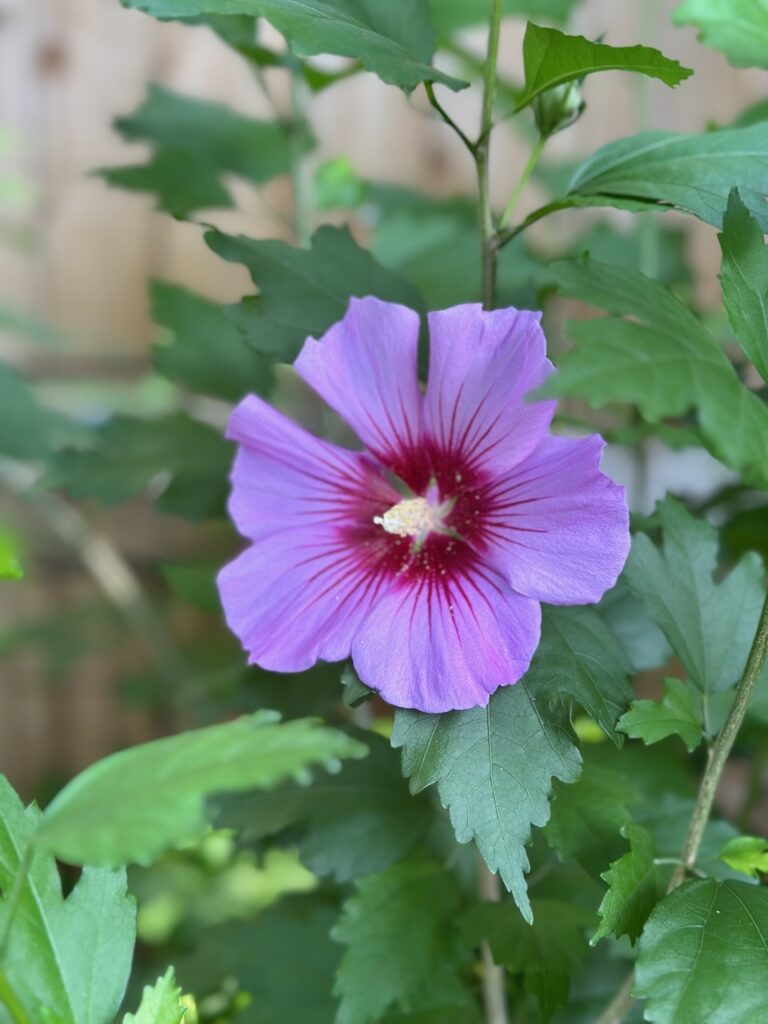
The captivating Rose of Sharon gets its roots from the Bible, with a poetic nod in the Song of Solomon.
This striking flowering shrub (or tree!) can symbolize God, the Creator, and is a cherished reminder of His love.
Rose of Sharon can come in many colors, including pink, purple, blue, and white. It’s part of the hibiscus family and produces large, tropical-esque blooms.
Rose of Sharon love light, but can still thrive in partial shade.
Also, they can rapidly multiply. (Don’t worry, they’re not in any way associated with gremlins and if you water or feed them after midnight, they stay cute.) This is great news if you want a nice hedge or just like free trees.
The plentiful Rose of Sharon in my own backyard reminds me that God’s love is literally everywhere. I have new saplings continually popping up. God won’t let me forget He’s there. And he won’t let you forget either.
(Translation: You’re loved.)
Flowers and Their Meanings Conclusion

Hey, all-a-y’all sweet buttercups! What flowers (and their meanings!) are you planting in your garden? What is your dream garden? I’d love to hear your thoughts in the comments!
Posts You Might Dig If You Like Flowers and Their Meanings
7+ Easy Pollinator Plants That Make You Look Like a Gardening Genius
What to Expect When You’re Not Expecting to Grow a Front Yard Pumpkin Patch
How I Designed My Dream Secret Garden Door
My Favorite Garden Stuff
- This weed grabber is such a game-changer for trimming English ivy. English ivy is pretty, but it ain’t no joke!
- If mosquitoes are your worst enemy, this natural mosquito eliminating product is SO great. I’ve tried everything to manage mosquito bites from these dainty demons of the underworld, while swearing off chemicals. AND this is ACTUALLY working. I’m serious. I cannot believe it.
- I’m growing my grapevine on this trellis bench. The actual one I ordered looks sold out, but this romantic bench is very similar.
- This faux brick edging is very cool and EASY. You can shape it anyway you want and I actually did it by myself because of how lightweight it is. Not gonna lie, they’re pricey, but it’s an option if you’re tired of lugging heavy bricks.
- Because my husband broke our glass hummingbird feeder with a golf club, we got this plastic one. But it all worked out since the hummingbirds (and one woodpecker!) are really into it. There’s a place for them to rest if they’re tired of flitting (and they actually stand there!). It’s easy to clean and assemble, too.
- This is just for joy. My brother’s mom-in-law (and my shopping partner!) gave me this darling garden light that makes me smile each time it twinkles at dusk.


Fantastic read – love the humour!!! I didn’t realize that flowers had meaning. Love how you threw in a little history for some of them.
Thank you, Stelios! That means a lot!! I’m glad you enjoyed the meanings and history. I love the legends associated with things–makes it even more special! 🌈
I found my Rose of Sharon!
Love It!
Great writing, Keep up the good work!
Thanks, Dad! Yep, Rose of Sharon is lovely indeed! Love you! ❤️
The Rose of Sharon has flowers that open in morning and close at night! How magical! Of course, they come from above. Every morning they magestically appear — all for me! Thanks for letting us know about this magnificent plant!
Thanks, Mom! The Rose of Sharon does have a magical, enchanting quality to its flowers. They tell you you’re loved, too. I love them! Love you! ❤️
So beautiful! I loved reading this post and learning more about these beautiful flowers.
Thank you, Catherine! I really appreciate that! I’m glad these flowers brought you joy today! 🌸
I love learning about the meanings behind some flowers, and how this can enhance the choices we make when we look for flowers or arrangements for certain events (or just to have something beautiful and meaningful at home). Thanks for sharing this!
Thank you so much, Molly! Yes, there’s something inspiring about knowing the flower meanings and how they influence our choices. I think a universal meaning for any beautiful bloom is hope–and I love that!
What a sweet, insightful, fascinating post! Adds an extra layer of thought and
intentionality when choosing which flowers to gift, plant and decorate with <3
Thank you so much, Gee! Yes, I love how flowers link us to loving thoughts of care, compassion, and hope, plus connect us to others❤️🌸
This was such a beautiful read! I never knew flowers held such deep meanings. Perfect for every romantic soul out there. 🌸💖
Thank you so much, Nursery Rhymes Girl! I’m so glad you enjoyed the flower meanings! They are definitely perfect for romantic souls🌸🥰